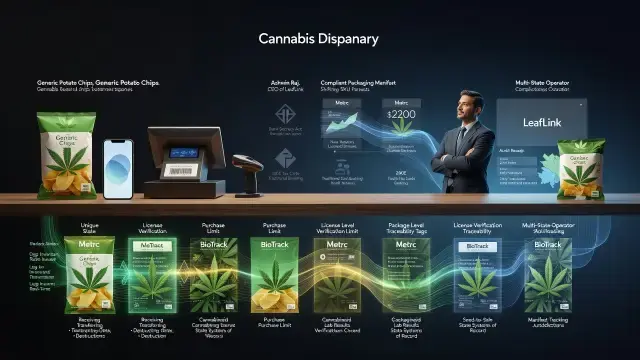
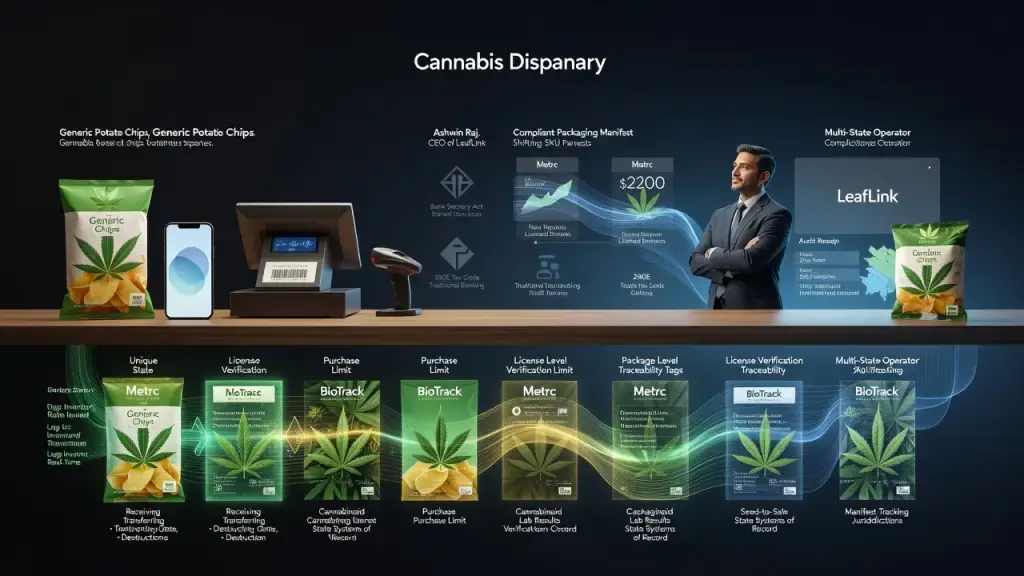
A dispensary checkout looks ordinary enough - a register, a barcode scanner, a loyalty app pinging a customer's phone. But underneath that counter sits a compliance apparatus that conventional retail software was never built to carry. Every sale has to clear age verification, purchase limits and package-level tracking, then reconcile with a state system of record before the transaction is truly done. That gap between appearance and infrastructure is why cannabis technology remains its own category, not a cannabis-flavored version of something built for a grocery chain.
The Compliance Layer Changes Everything
Retail software built for mainstream commerce optimizes for speed, availability and cost. Cannabis software has to do all of that while also proving, at any moment, where a given unit is, what condition it's in and how it got there. Ashwin Raj, CEO of wholesale marketplace LeafLink, puts it plainly: mature cannabis businesses need "compliance-aware commerce and operations." Generic retail and CPG platforms, he says, don't handle package-level traceability, license verification on every transaction, or the patchwork of state-specific rules governing taxes, packaging, purchase limits and reporting. Push that burden onto staff and spreadsheets, and cost and risk both climb.
Here's the mechanical reality driving that. Every cannabis package carries a unique state-issued tag. Every movement - receiving, transferring, destroying - has to be logged in platforms like Metrc or BioTrack, the seed-to-sale systems regulators use to track product from cultivation to sale. Product can only move between licensed entities, typically under a manifest with an active license verified on both ends. Batch-level lab results and cannabinoid content determine not just whether a product can be sold, but where. That's not a feature mainstream point-of-sale systems were designed to support. It's a regulatory obligation baked into the transaction itself.
Where Off-the-Shelf Tools Still Work, and Where They Don't
Not every function in a dispensary needs cannabis-specific software. Accounting, internal communications and general marketing can often run on conventional platforms without much friction. The trouble shows up in ecommerce, wholesale and payments - areas where state tracking mandates, license-to-license sales requirements and federal banking restrictions under laws like the Bank Secrecy Act collide with systems built for a normal retail transaction. Add in 280E, the federal tax code section that bars cannabis businesses from deducting ordinary business expenses, and the operational math gets even less forgiving. Generic platforms simply weren't engineered around any of that.
Product identification compounds the problem. Cannabis has no universal product codes the way packaged consumer goods do. A standard UPC system can track a bag of chips across every store in the country with one code. Cannabis can't. Pricing on a given SKU can shift within weeks as new harvests, new compliant packaging runs or new state tax rules move through the supply chain. Conventional retail analytics, built around stable product catalogs, can miss those shifts entirely - leaving operators working off numbers that are already stale by the time they see them.
What This Means for Operators Weighing Their Options
The practical implication for dispensary owners and multi-state operators: judge technology by total cost, not sticker price. A cheaper, conventional platform that requires manual workarounds for state reporting, manifest tracking or license verification can end up costing more in labor, compliance exposure and inventory shrinkage than a purpose-built system with a higher upfront fee.
For compliance officers, wholesalers and brands selling into multiple states, the calculus is similar. A platform that can't verify a buyer's license status at the point of sale, or that can't produce an audit-ready compliance log on demand, isn't saving money - it's deferring risk to whoever discovers the gap first, whether that's a regulator, an auditor or a bank reviewing the account. In a sector still locked out of much of the traditional banking system, that kind of exposure isn't abstract. It's the difference between a clean audit and a frozen account.