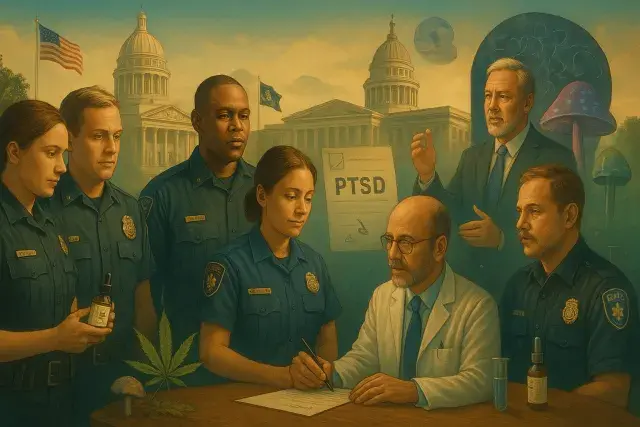
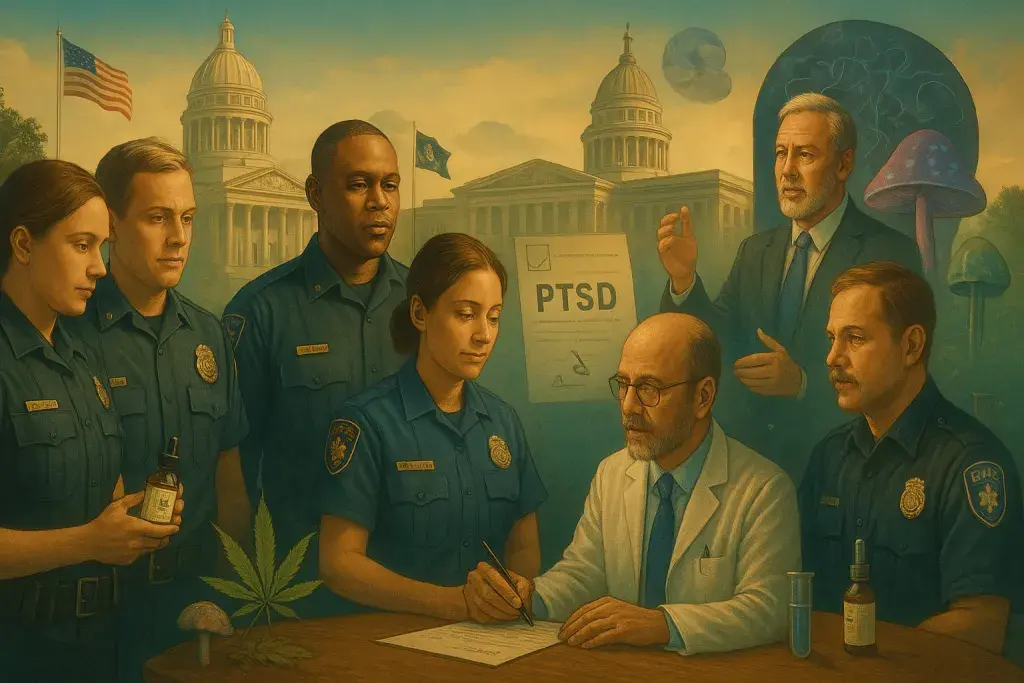
A growing number of states are expanding the legal toolkit available to first responders struggling with post-traumatic stress - moving beyond traditional therapy and prescription medication toward medical cannabis protections and supervised psychedelic research. The shifts reflect both an evolving understanding of occupational trauma and a recognition that conventional treatment pathways leave too many police officers, firefighters, and emergency medical workers without effective options. Several states acted this year, through legislation that ranges from employment protections for medical cannabis patients to new commissions and expanded clinical research programs.
What the New State Laws Actually Do
The specifics matter here, because each state took a meaningfully different approach. Ohio Gov. Mike DeWine, a Republican, signed legislation creating a Post-Traumatic Stress Injury Commission - a body that will review applications from eligible first responders and help connect them with funding to cover treatment costs. Maryland went a different direction, enacting workplace protection language: starting in October, firefighters, paramedics, emergency medical technicians, and other rescue workers who are registered medical cannabis patients cannot be disciplined or dismissed solely for testing positive for cannabis metabolites, provided they are not impaired while on duty. For dispensaries and cannabis operators in states tracking these employment trends, read more about how adjacent state markets are developing regulatory frameworks that may inform similar protections elsewhere. The Maryland law draws a line that compliance-minded employers and cannabis businesses will recognize: metabolite presence in a drug test is not the same as active impairment, and the law reflects that distinction explicitly.
The Psychedelic Research Track Is Moving, Too
Connecticut and Missouri are taking the conversation further - into psilocybin and, in Missouri's case, ibogaine. Connecticut expanded a Yale University pilot program studying psilocybin-assisted therapy, opening participation to any state resident 18 or older who meets the clinical eligibility criteria set by Yale's institutional review board. The program had previously been limited to veterans, retired first responders, and frontline health workers. Missouri's legislature moved a bill that would allow veterans and first responders in approved research studies to receive psilocybin and ibogaine under medical supervision for PTSD and other mental health conditions - though the legislature adjourned in May before the bill could reach the governor's desk. These are research tracks, not commercial dispensary programs. But the direction of travel is unmistakable.
The Occupational Context Operators Should Understand
Jason Cerrano - a retired firefighter and paramedic with more than 20 years of experience in Missouri, now working as director of commercial research and development at IDEX Fire & Safety - put the cumulative nature of first responder trauma plainly: "When you are in the fire service, or any first responder industry, or especially in the military, stuff builds up over time, and what happens is you see so many things that the crazy stuff starts to at least seem normal." That normalization process is exactly why standard outpatient counseling has historically failed to reach a significant portion of this population. Trauma that accumulates over a career resists short-term intervention.
For cannabis retailers and multi-state operators, the policy movement matters on two levels. First, employment protection laws like Maryland's directly affect how dispensaries and cannabis businesses in those states must structure their own HR and compliance policies - medical cannabis patients on staff cannot be treated as automatic liabilities under drug testing programs. Second, the broadening of first responder access to medical cannabis and experimental therapies signals a slow but durable shift in how state legislatures and regulators think about cannabis as a harm-reduction and health-adjacent tool. That framing has implications for how medical cannabis programs are licensed, how patient qualification criteria are written, and ultimately how dispensary operators position their medical programs relative to adult-use offerings. The line between medical cannabis and wellness is one regulators are still drawing - and first responder legislation is one of the places where that line gets tested.