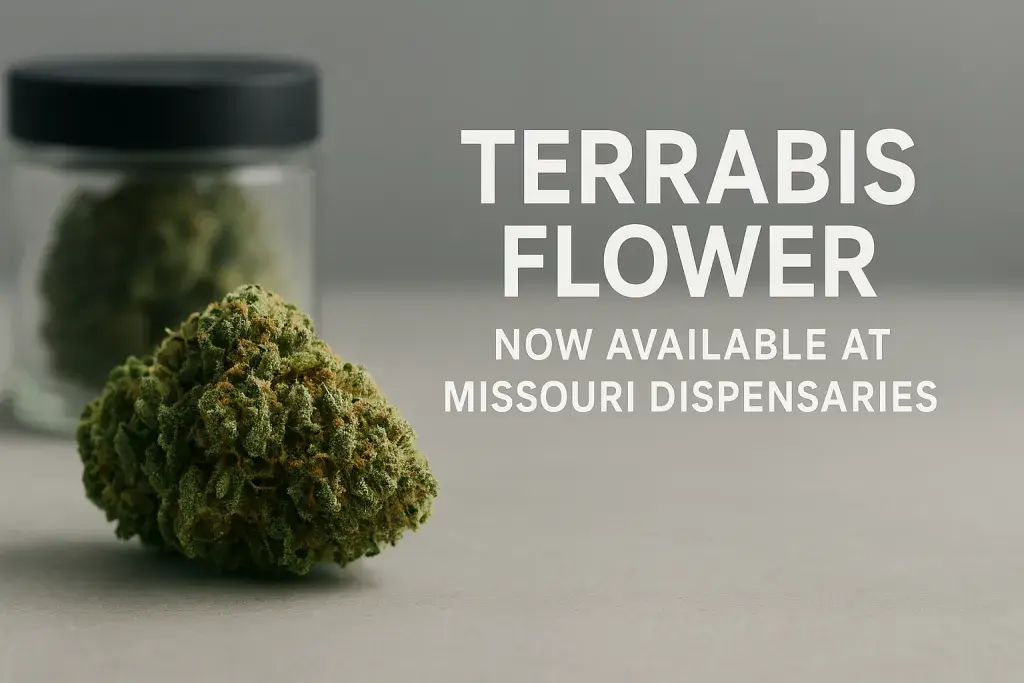
Terrabis has introduced its own flower brand into Missouri's adult-use market, giving the multi-state operator a house-label product line to sit alongside its wholesale purchases. The rollout, announced July 24 from the company's O'Fallon headquarters, covers all four of its Missouri dispensaries - O'Fallon, Creve Coeur, Hazelwood and Springfield. It's a modest move on paper, but branded flower programs tend to signal something bigger about where an operator wants its margins to come from.
Here's the mechanism worth understanding: when a dispensary sells third-party wholesale flower, it's working within someone else's pricing structure and someone else's batch inconsistencies. A house brand, grown under the retailer's own cultivation standards and tracked through the same seed-to-sale system the company uses for compliance reporting, gives Terrabis more control over cost basis, shelf positioning and inventory turnover. That control matters more than it sounds. Missouri operators, like their counterparts in Colorado and other regulated markets, depend on tight coordination between cultivation data, METRC reporting and point-of-sale systems to keep batch tracking clean - the kind of back-end discipline that platforms such as Metrc-compliant POS for Colorado were built to support across state lines, even as Missouri runs its own version of that compliance infrastructure. Metrc-compliant POS for Colorado
The initial Missouri assortment includes two cultivars, Moonbow and Zoapinator, offered in 3.5-gram and 14-gram formats - standard SKU sizing that lets budroom staff slot the new product into existing shelf categories without disrupting POS configurations. Additional strains, Point Break and Strawberry Candy, are slated for early August, which suggests a phased release rather than a full-catalog swap. That's a sensible approach; operators rarely benefit from flooding a menu with untested SKUs all at once, since it complicates lab testing schedules and COA turnaround for compliance teams already managing batch documentation for existing wholesale lines.
Why Branded Flower Matters for Multi-State Operators
Terrabis Flower first launched in Illinois in 2025, and its Missouri debut extends that branded footprint into a second state. For a multi-state operator, replicating a flower brand across markets isn't just a marketing exercise - it's a hedge against wholesale price volatility and a way to build consistency that customers can recognize regardless of state lines. In practice, though, cultivation standards, testing thresholds and packaging rules differ state to state, so a brand can share a name without sharing an identical production process. Compliant packaging requirements in Missouri, for instance, don't automatically mirror Illinois regulations, meaning Terrabis has to manage separate compliance logs even for what looks like the same product on a shelf.
Portfolio Expansion and What It Signals
The flower launch follows other recent house-brand additions, including Jelly Roll Shots and Mind Melt vapes, pointing to a broader strategy of building a diversified product portfolio rather than relying solely on third-party wholesale menus. For dispensary operators generally, this kind of vertical branding can improve margin retention under 280E pressure, since house products often carry different cost accounting than purchased inventory. It also creates more predictable wholesale relationships for the company's own cultivation side, smoothing demand forecasting.
None of this changes the baseline consumer-safety framework. Products still move through required lab testing, batch tracking and age-restricted retail access under Missouri's regulatory structure, and selection will vary by location as inventory and licensing allow. The O'Fallon store's 24-hour drive-thru pickup option adds convenience, not exemption from those standards - every transaction still runs through the same compliance and verification checks as any counter sale.