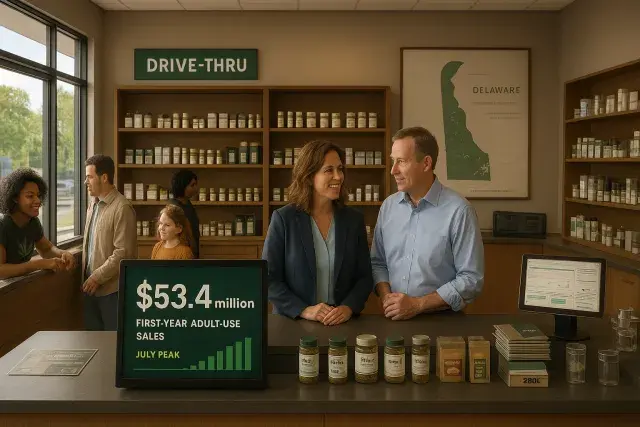
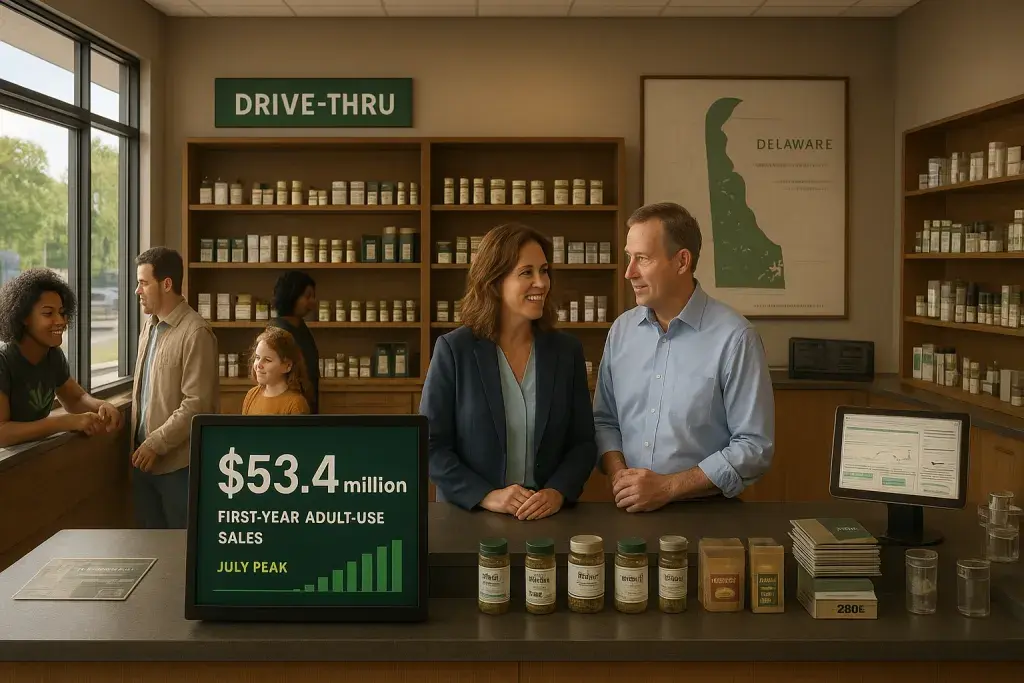
Delaware's recreational cannabis market closed out its first year with more than $53.4 million in adult-use sales, more than double what the state's medical-only program generated the year before legal sales began. Marijuana Commissioner Joshua Sanderlin told WBOC the momentum has kept building, with July marking the biggest sales month to date. That kind of trajectory matters, because a first-year stumble in a new adult-use state tends to spook investors and slow license applications for years afterward.
The state's Office of the Marijuana Commissioner now counts 38 active licenses spread across cultivation, manufacturing, retail and testing - a modest number compared to more mature adult-use states, but enough to establish real supply chain infrastructure. Store-level operators are watching how quickly that number grows, since every new cultivator or manufacturer coming online changes wholesale pricing and shelf variety for retailers already serving customers. Point-of-sale infrastructure and inventory software matter here too; operators scaling in newer markets often look to established systems, the kind of seed-to-sale integrated point-of-sale for Oregon dispensaries that have run adult-use programs for close to a decade, as a template for what compliant retail operations need to track batches, taxes and age verification correctly from day one. point-of-sale for Oregon dispensaries
What Growth Looks Like on the Ground
The Farm, a family-owned operation in Felton that started as a medical dispensary, illustrates the shift plainly. CEO Jennifer Stark said recreational sales pulled in customers who never wanted a medical card in the first place - a population every adult-use state eventually taps, since medical registries typically only capture a fraction of actual cannabis consumers. Store Manager Jim Van Patten noted the location's drive-thru has been a draw for customers who, in his words, had been waiting years to buy legally. That pent-up demand explains a lot of the early sales curve; it tends to flatten once novelty wears off and access points multiply.
The Federal Wall Still Shapes Every Balance Sheet
Here's the catch that doesn't show up in headline sales figures: cannabis remains federally illegal, so Delaware operators can't walk into a bank for a business loan or apply for SBA financing. Sanderlin was direct about it - seed capital is one of the hardest parts of starting a cannabis business, full stop. That reality shapes everything downstream, from real estate deals structured around cash-intensive operations to the persistent burden of 280E, the federal tax code section that bars cannabis businesses from deducting ordinary expenses because the product remains a controlled substance. Compliance logs, testing costs and packaging requirements add up fast when a business can't finance its way through a slow quarter the way a conventional retailer could.
Social Equity and What Comes Next
The state's Social Equity Fund has approved nine grants and distributed more than $1 million to help entrepreneurs without existing capital or industry connections enter the market. That's a small but meaningful counterweight to the financing gap described above, though it won't replace the working capital most retail and cultivation operations need to scale.
- 38 active licenses across cultivation, manufacturing, retail and testing
- More than $53.4 million in adult-use sales in the first year
- Nine social equity grants totaling over $1 million awarded
- No access to traditional bank loans or SBA financing due to federal prohibition
Sanderlin says the priority now is supply - more cultivators, more manufacturers, more product diversity on dispensary shelves. That's the quieter, less flashy work of building a market: not the launch, but the years of steady licensing, compliance enforcement and lab testing that determine whether Delaware's cannabis industry matures into something stable or stays dependent on pent-up demand that eventually runs out.