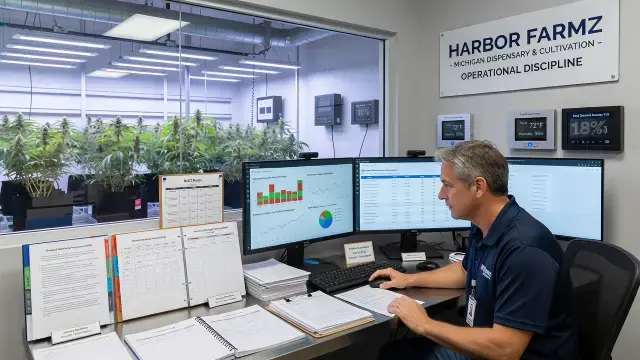
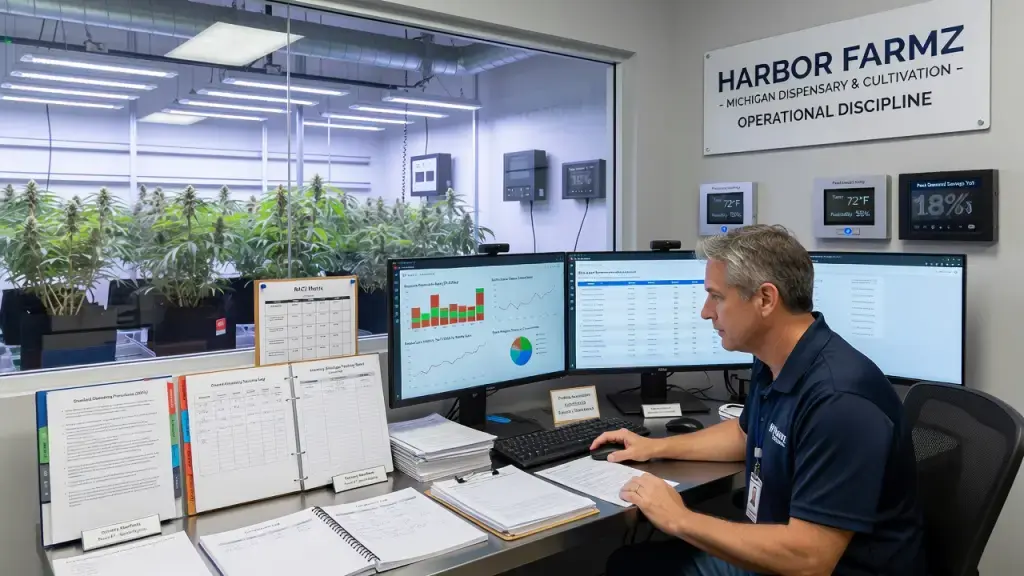
A Michigan cannabis operator's path from sales lead to general manager offers a useful case study in what actually keeps a license solvent in a crowded, low-margin market. The operator, now running Harbor Farmz after three years focused initially on sales and marketing, points to back-office infrastructure - not product innovation or storefront experience - as the real driver of stability.
Why Structure Beats Instinct in a Saturated Market
Michigan's adult-use market has more licensed operators chasing the same wholesale menus than the math supports. Wholesale pricing has compressed, and when that happens, the businesses that hold on are rarely the ones with the flashiest packaging. They're the ones that know their cost structure down to the SKU. Building org charts, RACI matrices, and written SOPs sounds like paperwork. In practice, though, it's the difference between a business that can scale and one that collapses the moment a key employee leaves. If a process only lives in one person's head, it isn't a process - it's a liability waiting to surface during an audit, a staffing gap, or a compliance inspection.
That discipline matters more under 280E, the federal tax code section that bars standard business deductions for plant-touching companies. Operators who don't know their true cost of goods sold are effectively flying blind on margin, and in a market this tight, that's not a small risk.
Repricing After a Wholesale Tax Change
When Michigan's wholesale tax on cannabis took effect, every product on Harbor Farmz's menu required a full repricing pass, grounded in an all-in COGS overhaul rather than a quick percentage bump. That's a heavier lift than it sounds. A new wholesale tax doesn't just add a line item - it ripples through margin calculations on every batch, every packaging format, every retail account on the books. Operators who reprice reactively, SKU by SKU, tend to bleed margin somewhere in the process. A full cost rebuild, done once and done right, is slower upfront but far more defensible when margins are already thin.
Dashboards, Velocity Data, and Cutting Energy Spend
Harbor Farmz built a live operations dashboard pulling from LeafLink - tracking accounts receivable aging, product line performance, and retail margins in one place instead of scattered spreadsheets. That kind of visibility changes how product decisions get made. New product lines and packaging formats were launched based on velocity data, meaning what was actually selling and moving off budroom shelves, rather than gut feel about what a line manager thought customers wanted.
The same logic extended to facilities. An energy analysis and room consolidation reportedly cut daily power use and peak demand meaningfully - a reminder that cultivation and processing operations carry utility costs that rival rent in some markets, and that efficiency gains there flow straight to the bottom line, not just the sustainability report.
What This Means for Other Operators
None of this is glamorous, and that's the point. Compliance logs, inventory shrinkage tracking, delivery manifests, wholesale account management - these are unglamorous disciplines that determine whether a cannabis business survives a tax change, a price war, or a bad quarter.
- Written SOPs and clear organizational roles reduce dependency on any single employee and support audit readiness.
- Full COGS visibility is necessary to reprice accurately when state or local tax structures shift.
- Centralized dashboards pulling from wholesale platforms like LeafLink give operators real-time visibility into receivables and margin by product line.
- Facilities costs, particularly energy use in cultivation and processing, deserve the same scrutiny as retail pricing.
Michigan's market remains saturated, and margins show no sign of loosening soon. The operators likely to last are the ones treating data infrastructure and operational discipline as baseline requirements for staying licensed and solvent - not optional upgrades reserved for better years.