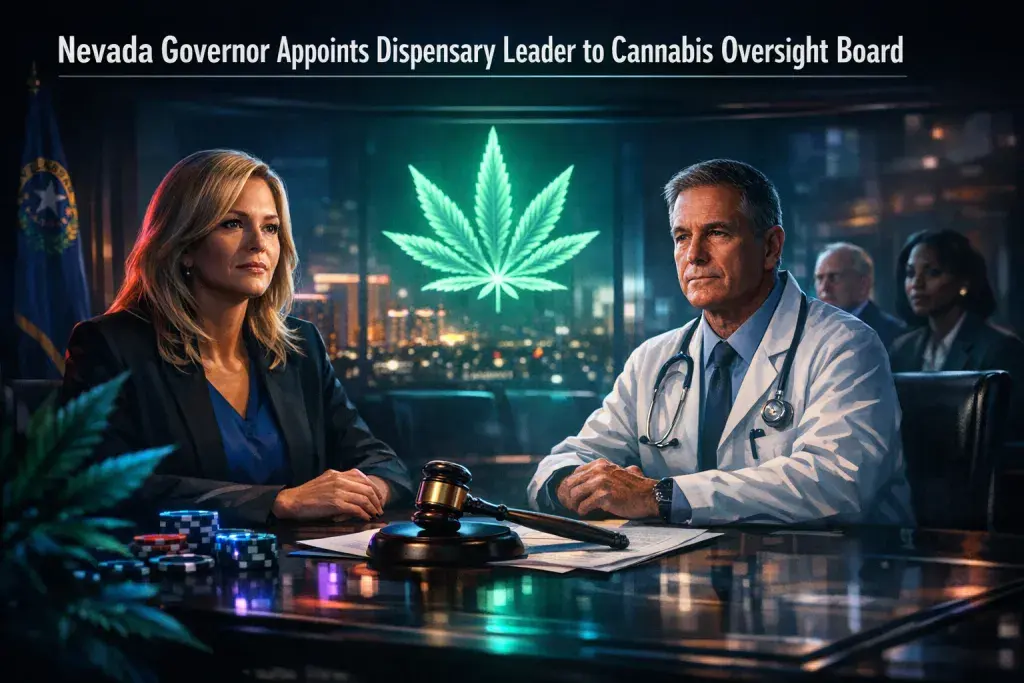
Governor Steve Sisolak appointed Riana Durrett, former executive director of the Nevada Dispensary Association, and Dr. Bryan Young, a Reno physician, as the final two members of the state's Cannabis Compliance Board. This completes the five-person panel tasked with regulating Nevada's legal marijuana industry, which generated over $1 billion in tax revenue last year. The appointments signal a push to apply rigorous oversight modeled on the state's gaming regulations to the rapidly expanding cannabis sector.
Industry Veteran Fills Key Expertise Slot
Durrett led the Nevada Dispensary Association since 2015, guiding the group through pivotal changes. She lobbied for the industry as medical marijuana dispensaries launched that year, then navigated recreational legalization in 2016 and subsequent regulatory updates. With a law degree from UNLV's Boyd School of Law and ongoing master's studies in gaming law, Durrett represented dispensaries amid explosive growth. Her husband, Democratic state Sen. James Ohrenschall, adds a layer of political connectivity, though board members serve independently. The association named Layke Martin, a lawyer and wife of state Treasurer Zach Conine, as her successor last month.
Physician Bolsters Medical Perspective
Dr. Bryan Young brings clinical expertise to the board. He earned his medical degree from the University of Nevada School of Medicine, practiced in Las Vegas, and has spent the past 12 years in Reno. His appointment fulfills the statutory requirement for a doctor on the panel, which also mandates an industry expert, attorney, finance specialist, and someone with law enforcement or investigative background. Existing members include former Gaming Control Board chair Dennis Neilander, Las Vegas banker Jerrie Merritt, and chair Michael Douglas, ex-Nevada Supreme Court Chief Justice.
New Board Mirrors Gaming Regulation Model
The Cannabis Compliance Board assumed regulatory duties from the Nevada Department of Taxation on July 1. Lawmakers created it to import Nevada's "gold standard" protocols from gaming oversight, addressing complaints of lax enforcement in cannabis. In its early months, the board adopted fresh regulations, ended a freeze on license transfers, and issued complaints plus record fines against violators. Part-time members earn $20,000 to $27,500 annually. Sisolak praised the appointees for their "unique expertise," predicting they will strengthen the board's judgment.
Implications for Nevada's Cannabis Market
Nevada legalized medical marijuana in 2000 but built its modern industry post-2015, when dispensaries proliferated. Recreational sales began in 2017, fueling economic booms but also challenges like oversupply and compliance lapses. Stricter board oversight could stabilize the market, protect consumers, and align cannabis with gaming's reputation for integrity. As other states expand programs, Nevada's model may influence national trends, balancing business growth with public safety.