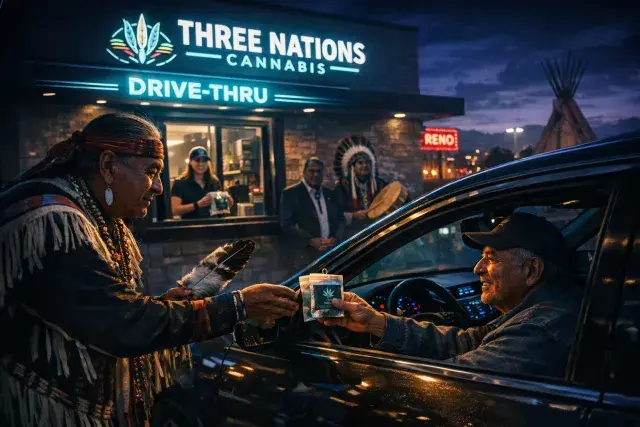
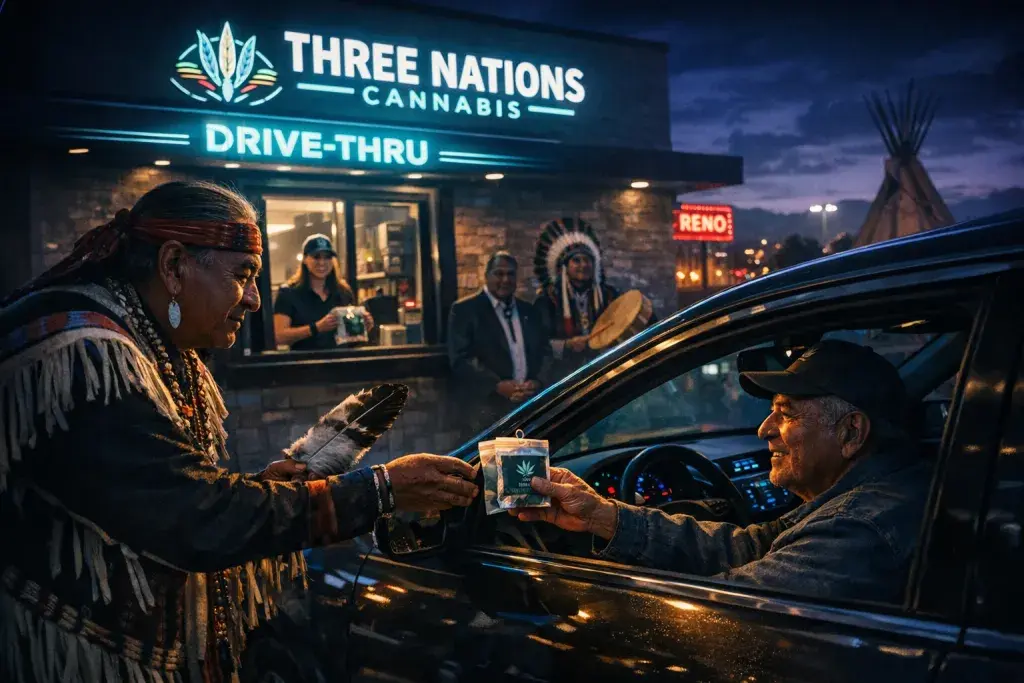
Reno-Sparks Indian Colony opened its first drive-thru cannabis dispensary with a soft launch Saturday afternoon, following a traditional cultural blessing by tribal members featuring prayers and music. Arlan Melendez, RSIC chairman, made the inaugural purchase—a cream for shoulder pain—signaling the tribe's push into cannabis as a tool for economic self-determination. Local leaders, including Reno Mayor Hillary Schieve and City Council member Naomi Duerr, attended the event at the 12,000-square-foot facility on South Virginia Street.
Tribal Traditions Meet Modern Enterprise
The blessing ceremony rooted the opening in Paiute, Shoshone, and Washoe cultural practices, underscoring RSIC's identity as a federally recognized tribe blending heritage with commerce. Three Nations Management Corporation, fully owned by RSIC, operates the dispensaries, building on the tribe's established Tribal Smoke Shop businesses nearby. This approach reflects how Native nations across the U.S. integrate sovereignty with state-legal industries like cannabis, where federal restrictions limit non-tribal participation but allow tribal operations on reservation lands.
Strategic Expansion Drives Economic Goals
Melendez highlighted the dispensary's role in RSIC's diversification strategy, creating jobs for tribal members and the public while funding elder care, education, health services, housing, infrastructure, language preservation, culture, and youth programs. Currently, only drive-thru lanes operate at the Virginia Street site, with indoor retail set for April. A second location in Verdi, repurposed from a former Taco Bell near Gold Ranch, opens March 12, and a third in Spanish Springs follows soon.
Broader Implications for Tribal Sovereignty
RSIC's moves parallel other tribes entering cannabis to generate revenue amid historical economic challenges on reservations. These ventures operate outside Nevada's strict regulatory framework due to tribal sovereignty, offering tax advantages and autonomy. As cannabis legalization spreads, such initiatives promise sustained investment in community needs, though they navigate ongoing federal illegality and local market dynamics.