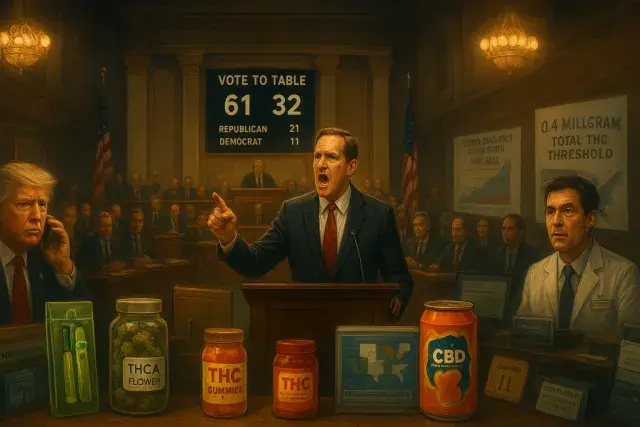
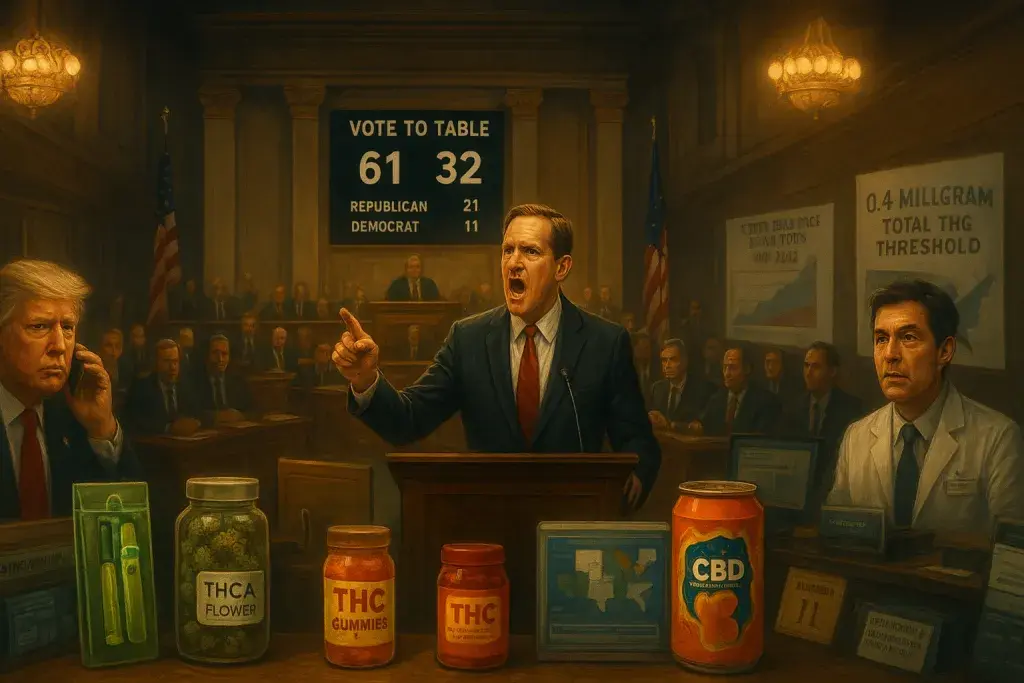
A one-month reprieve for intoxicating hemp retailers is staying on the books, at least for now. The US Senate on Aug. 8 voted 61-32 to table an amendment from Sen. Ted Budd, R-NC, that would have stripped a 30-day delay out of the chamber's continuing resolution, keeping the broader federal hemp restrictions locked in for their original Nov. 12 start date rather than pushing to Dec. 11. The vote crossed party lines - 21 Republicans joined 11 Democrats against tabling - and put Budd at odds with both his own leadership and the White House.
For dispensary operators, hemp brands, and convenience-store chains stocking THC beverages and gummies, the practical stakes are enormous. The federal law approved in November 2025 redefines hemp around total THC content and bars finished hemp-derived cannabinoid products containing more than 0.4 milligrams of combined total THC per container - a threshold tight enough to wipe out most delta-8 vapes, THCA flower, and infused drinks currently sold outside licensed cannabis channels. Retailers straddling both hemp and state-licensed cannabis markets are watching this closely, since compliance infrastructure built for one regulatory track rarely transfers cleanly to the other; operators managing point-of-sale systems built for licensed adult-use and medical sales, like those reflected in listings for oklahoma cannabis dispensary pos platforms, understand how quickly a shifting compliance deadline can force menu changes, SKU pulls, and inventory write-downs.
Why Budd Pushed Back Against His Own Party
Budd framed the fight almost entirely around youth access, citing North Carolina emergency department data showing a steep rise in cannabis-related visits among minors between 2017 and 2025 and pointing to hemp packaging that mimics candy and snack brands. That's not a fringe concern in the industry - packaging design has become one of the more contentious compliance flashpoints nationally, with several state cannabis regulators already requiring child-resistant, non-mimicking packaging for licensed products. Budd's argument, in effect, was that intoxicating hemp sold in gas stations and grocery aisles operates with none of those guardrails.
The White House saw it differently. President Trump reportedly called Budd directly as the dispute escalated, and CMS Administrator Dr. Mehmet Oz publicly urged senators to preserve the delay, warning that an abrupt Nov. 12 cutoff could disrupt recent federal efforts to expand senior access to full-spectrum hemp-derived CBD. Budd countered that medical CBD access didn't require keeping intoxicating hemp products on convenience-store shelves - a distinction regulators drawing up compliant product categories will likely have to formalize eventually.
North Carolina's Parallel Standoff
The federal fight is playing out alongside a nearly identical stall in Raleigh. House Bill 328 would import the same 0.4-milligram total THC threshold into state law, banning most THC beverages, vapes, gummies, and THCA flower while setting a 21-and-older purchase age. The Senate approved the conference report 37-6 back on July 2, but the House has repeatedly declined to vote on it, leaving the bill parked in the Rules Committee.
Here's the catch for operators: even if Congress delays or softens the federal rule again, HB 328 would still apply in North Carolina, since the threshold would be written directly into state statute rather than borrowed from federal definitions. That means a multi-state hemp brand could face a compliant product in one jurisdiction and a prohibited one just across a state line, with no single national standard to plan around.
What Operators Should Watch Next
- Whether Congress extends the delay again before Dec. 11, or lets the stricter federal standard take effect
- Whether North Carolina's House takes up HB 328 or waits for Speaker Destin Hall's smaller working group to produce alternative language
- How wholesale menus, lab-testing requirements, and compliant packaging standards shift for hemp-derived products sold outside licensed dispensary channels
- Whether synthetic and chemically converted cannabinoids face separate restrictions, as several trade groups have requested
Fair enough to say nobody in this fight got exactly what they wanted. Budd lost his amendment but still voted for the underlying spending bill, which passed 90-6. The hemp industry bought a month, not a resolution. And retailers on both sides of the cannabis-hemp divide are left managing compliance calendars around a deadline that could still move again before winter.