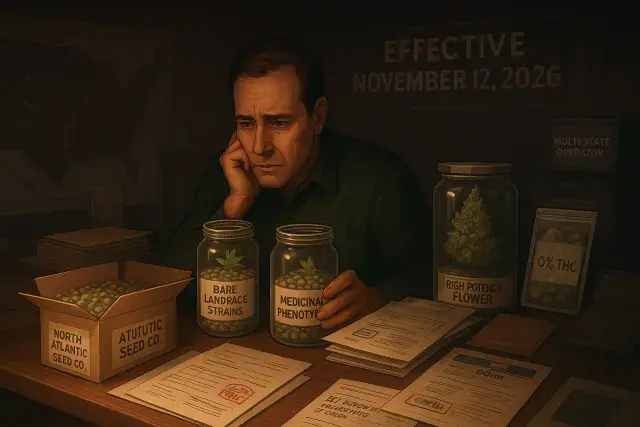
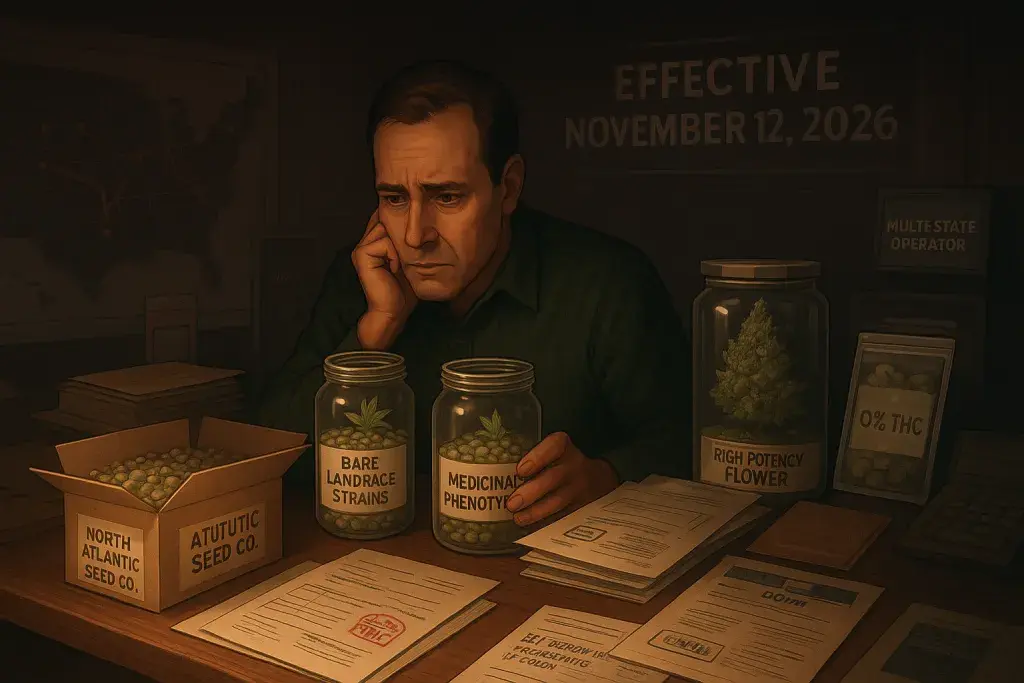
A single provision buried in the FY2026 Agriculture Appropriations Act is about to reshape who gets to breed, sell, and ship cannabis genetics in the United States. Section 781 redefines hemp to exclude viable seeds from any Cannabis sativa L. plant testing above 0.3% total THC - even though the seeds themselves carry no meaningful THC at all. Set to take effect November 12, 2026, the change threatens to push most of the domestic seed and breeding industry into Schedule I territory overnight.
For operators who track compliance closely, this is not a minor technical fix. It's a structural shift in how genetics move through the supply chain, and it lands on an industry that already juggles seed-to-sale tracking, COA verification, and shifting state-by-state THC thresholds. Multi-state operators running cultivation programs will need to trace every seed lot back to a parent plant that tested below the federal cap - a paperwork burden that didn't exist before and one that most breeders have no infrastructure to satisfy. Retail-side technology, from inventory software to point-of-sale systems like the ones supporting cannabis pos rhode island operators, will need to account for genetics-level compliance data that regulators haven't fully defined yet.
Why Seeds Became Collateral Damage
The 2018 Farm Bill's hemp definition was written broadly enough that seed companies could plausibly argue their products qualified as hemp, regardless of the THC content of the plants those seeds eventually produced. That ambiguity let interstate seed commerce flourish. Section 781 closes the loophole, but it does so by conflating genetic material with finished, psychoactive plant matter - treating a 0% THC seed the same as a high-potency flower product. The bill's real target was intoxicating hemp-derived beverages and edibles that alcohol industry trade groups viewed as unregulated competition. Seeds got caught in the wording almost as an afterthought, and the consequences for breeders are severe: banking access disappears, payment processors won't touch seed transactions, and carriers like USPS are expected to stop shipping seed packages altogether.
What's at Stake for Breeding and Biodiversity
Here's the catch that gets lost in the policy debate: seed companies aren't just selling a product, they're maintaining living genetic archives. Landrace strains, rare phenotypes, and decades of breeding work sit in seed banks that depend on interstate sales to stay financially viable. Cut off legal commerce, and many of those collections simply won't survive. Some breeders are already pivoting to clones or tissue culture to dodge the seed restriction; others are floating novelty seed sales positioned as collectibles rather than viable genetics. Neither workaround offers real legal protection, and both could be shut down by a single regulatory clarification.
- Seeds from plants exceeding 0.3% THC lose hemp status and become federally controlled
- Banking, payment processing, and interstate shipping for seed businesses face collapse
- Breeding programs preserving rare or medicinally valuable genetics risk permanent loss
- Retailers and cultivators inherit new tracing and documentation burdens with no clear compliance framework yet in place
Industry Response Remains Fragmented
Large multi-state operators have poured resources into rescheduling advocacy, but organized pushback specifically on seed policy has been thin. The American Seed Innovation and Growth Alliance, launched with backing from breeders including North Atlantic Seed Co., is pressing lawmakers for revisions before the November 2026 effective date. Their "Keep Seeds Legal" campaign and related fundraising remain modest relative to the scale of what's at risk. Whether that translates into legislative change is uncertain. What's clear is that dispensary operators, cultivators, and ancillary service providers should start tracking this provision now - not after enforcement begins.