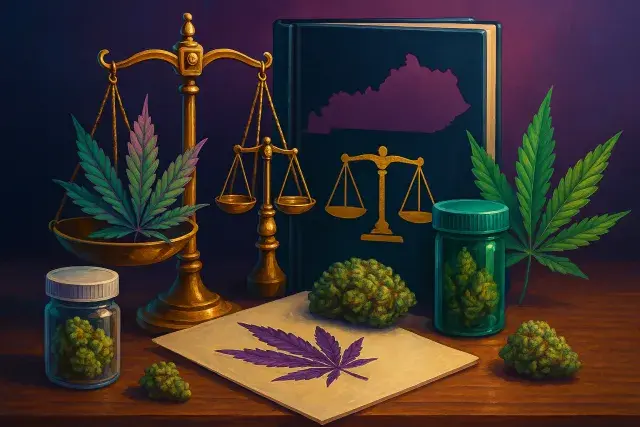

Kentucky spent decades as one of the strictest states on cannabis policy. Then, in 2023, Governor Andy Beshear signed Senate Bill 47 into law, creating a regulated medical cannabis program that took many observers by surprise. For a state with deep conservative roots and a history of aggressive drug enforcement, the shift was significant - and the practical details matter enormously to patients, caregivers, and business owners trying to understand what's actually permitted under the new framework.
The program did not open overnight. Kentucky set a phased implementation timeline, with licensed dispensaries expected to begin serving patients in 2025. In the meantime, qualifying patients gained a limited legal defense for cannabis obtained legally in other states. That gap between policy passage and operational infrastructure created real confusion. For dispensary operators preparing to launch, reliable point-of-sale technology became a pressing concern - tools like a cannabis POS system built for Kentucky compliance requirements are already being evaluated by prospective licensees navigating state-specific inventory and reporting rules.
This article covers the full picture: who qualifies for the program, what the possession limits are, how dispensaries will operate, and what patients and businesses need to know right now. Whether you're a patient researching your options or an entrepreneur preparing a license application, the details ahead will give you a clear, accurate foundation.
The Legal Foundation: How Kentucky's Medical Cannabis Law Came to Be
Senate Bill 47 and the Road to Legalization
Kentucky's medical cannabis program traces directly to Senate Bill 47, passed by the General Assembly and signed into law on March 31, 2023. The legislation was not the first attempt - cannabis bills had been introduced in previous sessions without success. What changed was a combination of shifting public opinion, growing pressure from patients with chronic conditions, and the visible success of medical programs in neighboring states like Ohio and Illinois.
SB 47 created a framework for licensed cultivation, processing, and retail within the state. It designated the Cabinet for Health and Family Services (CHFS) as the primary regulatory authority, with additional oversight from the Department of Alcoholic Beverage and Cannabis Control (ABC). The law explicitly excludes recreational use and maintains criminal penalties for cannabis activity outside the licensed system.
What Changed - and What Didn't
The passage of SB 47 did not decriminalize cannabis broadly. Possessing cannabis without a valid medical card or outside the program's parameters remains a criminal offense under Kentucky law. The statute created a structured exemption for registered patients, not a general relaxation of cannabis laws Kentucky has maintained for decades.
One notable provision allowed qualifying patients to purchase cannabis legally from out-of-state dispensaries starting in 2023, provided they had documentation of their condition and obtained the product in a jurisdiction where such purchases were lawful. This interim measure was designed to bridge the gap while Kentucky's own dispensary network came online.
Timeline and Implementation Milestones
The state outlined a phased rollout. Licensing applications for cultivators, processors, dispensaries, and safety compliance facilities opened in stages. The target for the first Kentucky marijuana dispensaries to begin serving patients was set for January 1, 2025, though regulatory processing timelines affected individual operators differently. Patients and providers had to meet registration requirements before that date to be ready when dispensaries opened.
Kentucky Cannabis Regulations: The Governing Framework
Regulatory Agencies and Their Roles
Two agencies share primary oversight of the Kentucky medical cannabis program. The Cabinet for Health and Family Services handles patient and caregiver registration, qualifying condition determinations, and practitioner certifications. The Department of Alcoholic Beverage and Cannabis Control manages business licensing - covering the entire supply chain from cultivators to retail dispensaries.
This dual-agency structure means that cannabis businesses must satisfy compliance requirements from two separate bodies. Licensing, operational standards, seed-to-sale tracking, and advertising restrictions all fall under distinct rule sets that operators must understand in parallel.
Licensing Categories and Requirements
Kentucky cannabis regulations establish four primary license types: cultivator, processor, safety compliance facility, and dispensary. Each carries its own application criteria, facility requirements, and operational restrictions. Dispensary licenses are capped by region to prevent market oversaturation, and priority consideration was given to applicants from economically distressed counties - a deliberate policy choice reflecting the state's awareness of cannabis as an economic development tool.
Applicants must pass background checks, demonstrate financial capacity, submit detailed operational plans, and show compliance with local zoning ordinances. Municipalities retain the right to prohibit dispensaries within their boundaries, which means the distribution of licensed retailers across the state will vary considerably by geography.
Seed-to-Sale Tracking and Compliance Obligations
All licensed entities must participate in a state-mandated seed-to-sale tracking system. This technology requirement ensures that every unit of cannabis - from cultivation through processing to retail sale - can be traced by regulators. Dispensaries must record all patient transactions, verify card status at point of sale, and maintain inventory records subject to state audit.
Advertising is tightly restricted under Kentucky cannabis regulations. Dispensaries cannot market to individuals under 21, cannot make health claims about specific products, and face limitations on where and how they can promote their services. These rules mirror restrictions seen in more established state programs and are designed to prevent the kind of predatory marketing that drew federal scrutiny in other markets.
Qualifying Conditions and Patient Registration
Who Is Eligible for the Kentucky Medical Cannabis Program
Kentucky's program is condition-specific, meaning patients must have a diagnosis that appears on the state's approved list. The qualifying conditions include cancer, chronic pain, epilepsy and seizure disorders, multiple sclerosis, post-traumatic stress disorder, and a range of other serious medical conditions. The list is not exhaustive in statute - the CHFS has authority to add conditions through a petition and review process.
To register, a patient must receive a written certification from a licensed Kentucky practitioner who has completed required training on cannabis therapeutics. The practitioner cannot have a direct financial interest in a dispensary - an anti-corruption measure built into the law. Once certified, patients apply to the state registry and receive a medical cannabis card upon approval.
Caregiver Registration and Minors
Patients who cannot obtain cannabis for themselves - due to age, disability, or medical condition - may designate a registered caregiver. Caregivers must pass a background check and are legally permitted to purchase and transport cannabis on behalf of their designated patient. For minor patients, a parent or legal guardian serves in the caregiver role by default.
Minors face additional restrictions: only non-smokable forms of cannabis are permitted, and the certifying practitioner must explicitly document why cannabis is medically appropriate for a patient under 18. This gatekeeping reflects the legislature's concern about youth access, even within a therapeutic context.
Out-of-State Patients and Reciprocity
Kentucky's law does not include a formal reciprocity provision for patients registered in other states. Visitors holding valid medical cards from elsewhere do not automatically qualify to purchase from Kentucky marijuana dispensaries. This is a meaningful limitation for patients traveling through the state who rely on cannabis for daily symptom management and should be factored into travel planning.
Cannabis Possession Kentucky: Limits, Rules, and Penalties
Legal Possession Amounts for Registered Patients
Registered patients in Kentucky may possess up to eight ounces of medical cannabis at any given time. This limit applies to usable cannabis in any permitted form. Patients are required to carry their state-issued medical cannabis card whenever they possess cannabis, and must be able to produce it upon request by law enforcement.
Possession must occur in approved forms - flower, oils, tinctures, capsules, patches, and infused products are generally permitted. Smoking cannabis in public is prohibited. While home consumption is allowed, cannabis cannot be used in a vehicle, in a workplace that prohibits it, or in any location where smoking is otherwise banned.
What Remains Illegal Under Cannabis Laws Kentucky
Cannabis laws Kentucky currently maintains are unambiguous about the boundaries of the program. Growing your own cannabis plants at home is not permitted under the medical program - all product must come through licensed dispensaries. Sharing or transferring cannabis to another person, even without compensation, is illegal unless that person is your registered patient and you are their designated caregiver.
Purchasing cannabis outside the licensed system - from unregulated sources - remains a criminal offense regardless of whether the buyer holds a medical card. The card legalizes purchase and possession within the regulated framework; it does not create a general legal shield for any cannabis-related conduct.
Penalties for Violations Outside the Program
For individuals without a valid medical registration, cannabis possession remains a criminal matter in Kentucky. Possession of marijuana under eight ounces is a misdemeanor on first offense, carrying potential jail time and fines. Larger quantities and distribution offenses escalate to felony charges. These penalties reflect the fact that SB 47 created a narrow medical exemption - it did not alter the underlying criminal code for recreational possession.
Employers also retain significant authority. Kentucky's law does not require employers to accommodate cannabis use, even for registered patients. Employees can still be disciplined or terminated for positive drug tests, and safety-sensitive industries are under no obligation to waive testing requirements.
Kentucky Marijuana Dispensaries: Operations, Access, and What to Expect
How Dispensaries Are Licensed and Distributed
The state divided Kentucky into regions for dispensary licensing purposes, with a cap on the number of retail licenses per region. This geographic allocation was intended to ensure patients across the state - including rural areas - have reasonable access to licensed retailers, rather than concentrating dispensaries in Louisville and Lexington alone.
Local governments retain opt-out authority. A city or county can pass an ordinance prohibiting dispensaries within its jurisdiction, and many conservative municipalities were expected to exercise that right. The practical result is an uneven dispensary map, where access varies significantly depending on where a patient lives.
Products, Purchasing, and the In-Store Experience
Kentucky marijuana dispensaries are authorized to sell cannabis in multiple forms: flower, tinctures, oils, capsules, topicals, and infused edibles. Combustible products - cigarettes and cigars - are prohibited. Dispensary staff, known in many states as "budtenders," must complete training on product types, dosing guidance, and patient interaction before working the sales floor.
Purchases are made in person, with identity and card verification required at the point of sale. Online ordering for curbside pickup may be permitted depending on individual dispensary policies and regulatory guidance. Delivery to patients' homes was an area of ongoing rulemaking discussion, with final policies subject to confirmation by the ABC.
Pricing, Insurance, and Financial Realities
Medical cannabis is not covered by insurance in Kentucky, as is the case in every U.S. state - federal scheduling prevents it. Patients pay out of pocket, and prices will reflect both production costs and the compliance overhead built into the licensed system. Early dispensary pricing in new state markets tends to run higher than mature markets, often moderating as competition and supply increase over time.
For lower-income patients, this financial barrier is real. The legislature did not include a formal hardship pricing program in SB 47, though individual dispensaries may choose to offer their own discount structures. Advocacy groups have pushed for future legislative sessions to address affordability more directly.
Responsibilities of Practitioners, Employers, and Caregivers
What Certifying Practitioners Must Know
Physicians, advanced practice registered nurses, and physician assistants in Kentucky can certify patients for medical cannabis - but only after completing a four-hour training course approved by the CHFS. The certification is not a prescription; it is a written document affirming that the patient has a qualifying condition and that the practitioner believes cannabis may be therapeutically beneficial.
Practitioners are subject to professional oversight from their licensing boards even when certifying for cannabis. Issuing certifications without proper documentation or clinical justification exposes a practitioner to disciplinary action, which has had a moderating effect on the kind of "certification mill" operations seen in some other states.
Employer Rights and Workplace Policies
Kentucky employers are not required to modify drug-free workplace policies to accommodate registered cannabis patients. This means that a positive drug test - even for a patient using cannabis legally under state law - can be grounds for termination. Employers in federally regulated industries have no flexibility here whatsoever, as federal law still classifies cannabis as a Schedule I controlled substance.
Private employers have discretion. Some may choose to adopt policies that distinguish between off-duty medical cannabis use and impairment on the job; others may maintain zero-tolerance approaches. Employees should review their employer's drug policy carefully and not assume that a medical card provides workplace protection.
Caregiver Obligations and Limits
Registered caregivers carry legal responsibility for ensuring that cannabis they purchase reaches only their designated patient. They cannot serve as a caregiver for more than a limited number of patients simultaneously - the specific cap is set by regulation. Caregivers who divert cannabis to unregistered individuals face the same criminal exposure as any other unlicensed distributor.
Looking Ahead: The Future of Kentucky Medical Cannabis
Potential Expansion of Qualifying Conditions
The CHFS petition process for adding qualifying conditions means the program's scope can expand without requiring new legislation. Advocacy groups representing patients with conditions not currently on the list - including certain mental health diagnoses and autoimmune disorders - have already signaled plans to petition for inclusion. How aggressively the agency responds to these petitions will shape how broadly the program serves Kentuckians in practice.
The Recreational Cannabis Question
Kentucky has not passed recreational cannabis legislation, and as of the program's launch, there was no active legislative momentum toward adult-use legalization. The state's political composition makes broad legalization a longer-term prospect. However, neighboring states' revenue figures and tax receipts from cannabis sales have generated quiet conversations among fiscal conservatives about the cost-benefit analysis of prohibition.
Program Maturation and Market Development
As Kentucky marijuana dispensaries come online and begin generating real patient data, the program will face its first real test: whether supply meets demand, whether the licensing process produced a functional competitive market, and whether enforcement is consistent. Early-stage programs in other states have experienced everything from product shortages to price volatility, and Kentucky's relatively cautious rollout was partly designed to avoid those pitfalls.
The long-term health of kentucky medical cannabis as a program depends on continued political support, practitioner willingness to certify patients, and a regulatory environment that neither stifles the industry nor loses public trust through inadequate oversight.
Frequently Asked Questions
Can I use my out-of-state medical cannabis card at a Kentucky dispensary?
No. Kentucky does not have a reciprocity agreement with other states. Patients registered in other states are not authorized to purchase from Kentucky marijuana dispensaries. You must be a Kentucky resident with a valid state-issued medical cannabis card to make purchases within the program.
Is it legal to grow cannabis at home if I am a registered medical patient?
No. Home cultivation is not permitted under Kentucky's medical cannabis law. All cannabis must be purchased from a licensed dispensary. Growing plants at home - regardless of registration status - remains illegal and subject to criminal penalties.
What forms of cannabis are prohibited in Kentucky's medical program?
Cannabis cigarettes and cigars are prohibited. Smokable flower may be purchased and used at home, but combustible products marketed as cigarettes are specifically excluded. Public smoking is also banned, and consumption in vehicles or workplaces is not permitted regardless of the form used.
Can my employer fire me for using medical cannabis legally?
Yes. Kentucky law does not require employers to accommodate medical cannabis use, and a positive drug test can still result in termination even for registered patients. Employees in federally regulated industries face particularly strict limits, as federal law supersedes state medical protections in those contexts.
How many dispensaries can I expect in my area of Kentucky?
That depends on where you live. The state issued regional license caps to distribute access across the state, but local governments can prohibit dispensaries within their boundaries. Rural areas and conservative municipalities may have fewer - or no - nearby licensed retailers, potentially requiring patients to travel to access the program.
What happens if I possess more than eight ounces as a registered patient?
Possessing more than the legally permitted eight ounces exceeds the protections offered by your medical registration. Excess amounts could be treated as outside the licensed program, potentially exposing you to criminal possession charges. Staying within the legal limit is essential to maintaining the legal protections your registration provides.