Cannabis investors have spent five years learning a hard lesson: top-line growth means little if a company burns cash to get there. Dozens of multi-state operators expanded into new license markets, took on debt they couldn't service, and diluted shareholders repeatedly just to keep the lights on. Green Thumb Industries (OTC: GTBIF) avoided most of that pattern, and its first-quarter numbers show why the company is regarded as one of the sector's steadier operators.
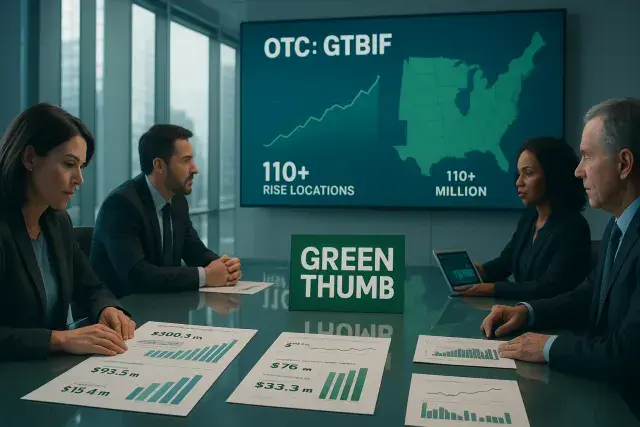
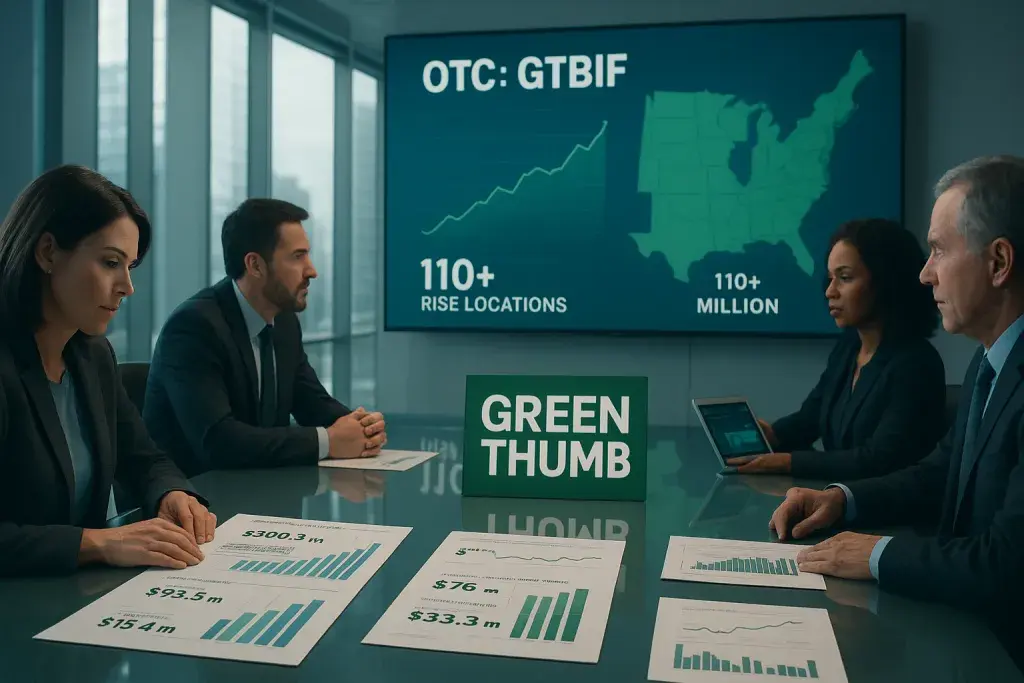
Revenue grew 7.4% year over year to $300.2 million. More telling, though, is what happened below that line: $76 million in operating cash flow, $93.5 million in normalized EBITDA, and GAAP net income of $15.4 million. In an industry where 280E tax treatment eats into margins and pricing pressure has flattened wholesale menus in mature states, that kind of profitability isn't standard. Operators watching their own compliance logs and inventory shrinkage numbers know how rare a clean income statement really is right now - the back-office systems that track it, from seed-to-sale platforms to point-of-sale terminals, only tell part of the story if the unit economics behind them don't hold up, which is part of why smaller operators evaluating dispensary software in Montana and similar limited-license markets are paying closer attention to cash conversion, not just sales figures, when picking infrastructure partners.
Balance Sheet Strength, Not Just Growth
Green Thumb ended the quarter with roughly $344.5 million in cash and $289.9 million in total debt - a ratio most cannabis operators would envy. Rather than issuing new shares to raise capital, a move that has diluted countless cannabis shareholders over the past decade, management repurchased about 6 million shares for $33.3 million during the quarter. After quarter-end, it bought back another 7.4 million shares, pushing 2025 buybacks to nearly $78 million. That's a real signal. Buybacks of that size suggest leadership believes the stock trades below the business's actual value, and that operating cash flow can fund shareholder returns without starving future store openings or wholesale expansion.
Selective Expansion Over Chasing License Growth
Green Thumb now runs more than 110 Rise dispensary locations nationally, with exposure to both medical and adult-use markets. New activity in Minnesota and Texas reflects a pattern of picking spots carefully rather than grabbing every available license. That discipline matters. Overexpansion - chasing every new state's adult-use rollout - is exactly what pushed several competitors into distressed refinancing and forced asset sales. Vertical integration only pays off when retail footprint, cultivation capacity, and compliant packaging operations scale together; add stores faster than supply chains and compliance teams can support, and margins erode fast.
What This Means for the Broader Market
Federal legalization remains stalled, 280E still imposes an outsized tax burden on plant-touching businesses, and several state markets are oversaturated with license holders competing on price. None of that has changed. What has changed is that Green Thumb built a profitable operation under today's rules instead of waiting on tomorrow's reform. Smaller, higher-risk operators may still offer bigger upside if federal policy shifts. But for investors and industry watchers tired of promises that outran fundamentals, Green Thumb's cash generation is the more convincing story on the board right now.