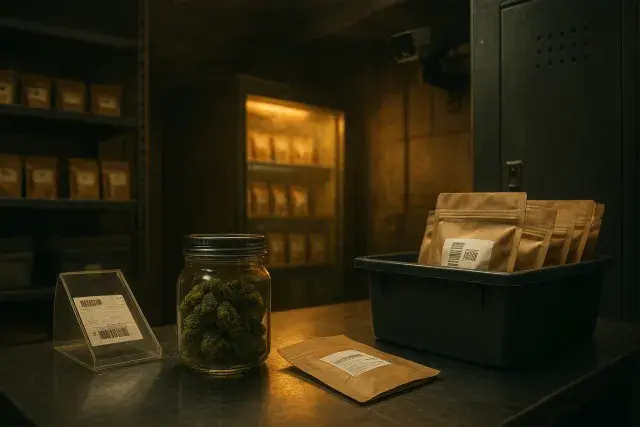
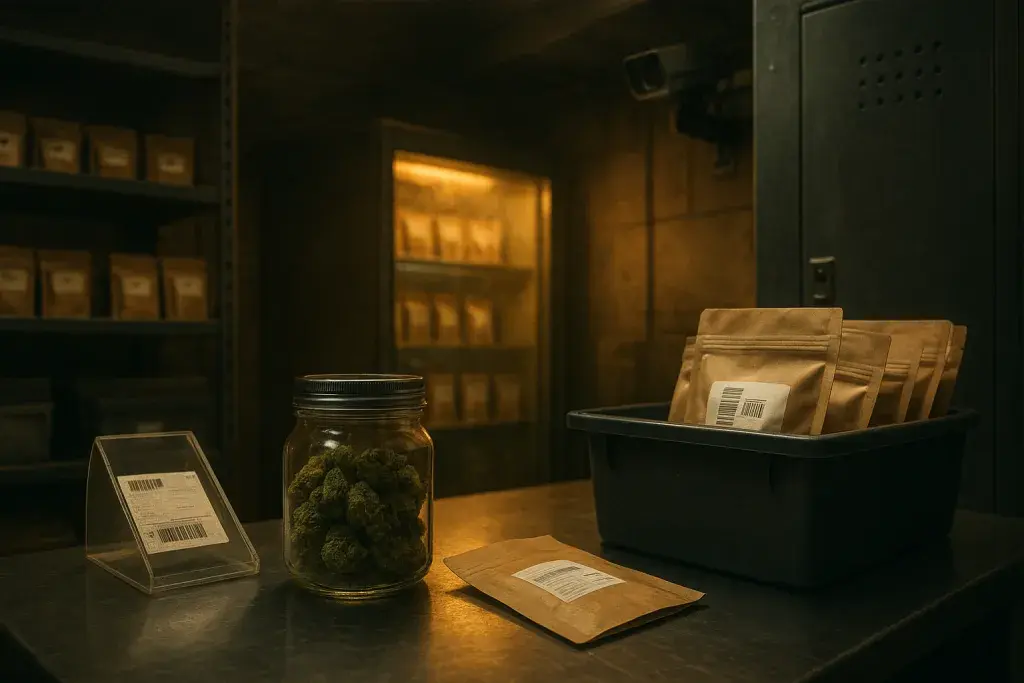
The Netherlands built one of the most recognized cannabis retail frameworks in the world - and then spent decades failing to fully regulate it. The Dutch tolerance policy, known as gedoogbeleid, permitted retail sales through licensed coffee shops while leaving wholesale supply in a legal grey zone. That contradiction - selling legal at the front door, sourcing illegal at the back - has defined Dutch cannabis commerce for over forty years. A belated attempt to close that gap is now reshaping what licensed cannabis retail actually means in the Netherlands.
The Supply Chain Problem That Defined Dutch Cannabis Retail
For most of its history, Dutch cannabis retail operated under what regulators politely called a tolerance framework. Coffee shops could sell to adults, but cultivators had no legal path to supply them. No licensing system. No seed-to-sale tracking. No certificates of analysis attached to incoming product batches. Operators managed inventory with no formal compliance log, no wholesale menu subject to regulatory review, and no standardized packaging or potency disclosure requirements comparable to those in adult-use markets in North America.
The thing is, that arrangement worked - loosely - for decades, primarily because enforcement pressure on the supply side remained inconsistent. But it left retailers structurally exposed: no defensible chain of custody, no audit trail, and no legal recourse if product quality was disputed. Any operator familiar with METRC-style tracking or state-mandated COA requirements would recognize immediately how far outside standard regulated retail practice the Dutch model sat.
The back-door problem was not a minor compliance gap. It was the entire supply chain.
Controlled Experiments and What They Reveal About Legalization Economics
The Netherlands launched a closed supply experiment - the Experiment gesloten coffeeshopketen - in a limited number of municipalities to test whether licensed cultivation could feed licensed retail without disrupting existing operations. A small number of approved growers supply participating coffee shops under regulated conditions, with product testing and traceability requirements attached.
The economics revealed by this kind of controlled rollout are instructive for any market moving from tolerance to full adult-use licensing. Compliance costs rise sharply when a retailer must document incoming product at the batch level, maintain temperature and storage logs, and ensure packaging meets disclosure standards. Wholesale pricing shifts when cultivators carry licensing overhead. Margin compression is the predictable result - and retailers absorb most of it, at least initially.
For dispensary operators in regulated North American markets, this reads as familiar territory. The transition from informal sourcing to fully licensed wholesale supply almost always produces a period of reduced margin, higher SKU management costs, and tighter cash flow. What's striking in the Dutch context is that coffee shop operators had no prior experience with any of this infrastructure. There was no existing compliance culture to build on.
Retail Compliance and Consumer Safety in a Maturing Framework
One direct consequence of the supply experiment is that participating retailers must now engage with product safety requirements that simply did not exist before. Potency testing, contaminant screening, and batch-level documentation are standard operating requirements in most adult-use jurisdictions. In the Dutch experiment, they represent a significant operational shift for retailers accustomed to buying product with no formal testing record attached.
Consumer safety implications are real. Without mandatory lab testing and COA requirements, retail customers had no reliable way to verify potency claims, pesticide exposure, or the presence of adulterants. Compliant packaging - child-resistant, labeled with accurate cannabinoid content - is equally absent from the legacy coffee shop model. Bringing those standards into a retail environment that has operated without them requires training, system investment, and a willingness to absorb short-term cost for long-term regulatory standing.
Age restriction enforcement is another area where the Dutch framework has been inconsistent. Most regulated adult-use markets require point-of-sale ID verification systems and maintain compliance logs as evidence of due diligence. Coffee shops have operated under a nominal eighteen-and-over rule, but enforcement has varied considerably by municipality. Formalizing that requirement - with documented POS-level checks - is not a trivial operational adjustment.
What Comes Next for Dutch Cannabis Retail
The broader legalization question in the Netherlands remains politically unresolved. The controlled supply experiment covers a fraction of the country's coffee shops. Most operators still source outside any regulatory framework, which means most product moving through Dutch retail cannabis carries no verifiable chain of custody and no formal safety documentation. That is not a sustainable position as European regulatory standards gradually tighten.
For operators in the experiment, the task now is proving that compliant supply chains are commercially viable - that licensed cultivation, batch testing, and documented wholesale transactions can support a retail business without eliminating margin entirely. That proof of concept matters well beyond the Netherlands. Other European jurisdictions watching regulated cannabis retail take shape are paying close attention to whether the Dutch, who had every structural reason to lead this space decades ago, can finally build a model that holds up under genuine regulatory scrutiny.
The potential was always there. Translating it into durable, compliant retail infrastructure is a different matter entirely.